Forget the Stetson: Galway's Animators Are Blowing Up the Western and Building Something Wilder
There's a peculiar kind of confidence required to take one of cinema's most exhausted genres — the Western — and announce, with a straight face, that you're going to make it feel new again. It's even more peculiar when that announcement comes not from Los Angeles or even London, but from a studio a stone's throw from the Corrib river, where the Atlantic wind rattles the windows and the nearest thing to a tumbleweed is a discarded Tayto crisp packet rolling down Shop Street.
And yet, that's precisely what a growing cohort of Galway-based animators are doing. They're pulling the Western apart at its stitching, examining what made it compelling in the first place, discarding what made it insufferable, and stitching something entirely stranger back together. The results are landing with Gen Z audiences across Britain and the Continent in ways that have industry observers doing double takes.
Why the Western, and Why Now?
It's a fair question. The Western has been declared dead so many times it ought to have its own Boot Hill monument. But creators working out of Galway's increasingly robust animation cluster suggest the genre's apparent exhaustion is precisely the point.
"The Western is basically a blank canvas at this stage," says one Galway-based director who's been developing an animated series that reimagines frontier mythology through the lens of Irish emigrant experience. "Everyone knows the iconography — the lone rider, the showdown at noon, the corrupt sheriff. But because everyone knows it, you can subvert it completely and the audience is in on the joke with you from the first frame."
For Gen Z viewers in particular, who have grown up consuming media with a fluency in genre deconstruction that would make any film studies lecturer weep with joy, the Western offers rich material. The classic Hollywood version — white hats versus black hats, civilisation taming the savage frontier — carries ideological baggage that younger audiences clock immediately. Rather than ignoring that baggage, Galway's animators are making it the subject.
Moral Complexity as the New Six-Shooter
The most striking departure from Western convention in projects emerging from Galway is the wholesale abandonment of the uncomplicated hero. Where the genre once demanded its protagonists be laconic, physically imposing, and essentially correct about everything, the animated Westerns being developed along the Wild Atlantic Way tend toward protagonists who are confused, compromised, and frequently wrong.
One project currently in development — a six-part animated series aimed squarely at the 16-to-25 demographic — centres on a female bounty hunter of Irish-Romani heritage navigating a frontier town that functions less like a morality play and more like a pressure cooker of competing interests, grievances, and survival strategies. The town itself is the story's real protagonist: a chaotic, vibrant, genuinely diverse community that looks nothing like the whitewashed settlements of classic Westerns, and everything like the kind of place actual historical frontier communities often were.
"We did the research," the project's lead writer notes, "and actual frontier towns in the American West were extraordinarily diverse — Indigenous peoples, Chinese railway workers, Mexican settlers, formerly enslaved people, Irish immigrants fleeing the Famine. The Hollywood version erased all of that. We're putting it back, but we're doing it through animation, which means we can push the visual language somewhere live action can't easily go."
Folklore at High Noon
What makes the Galway treatment distinctively Irish — rather than simply a more progressive version of what American studios might produce — is the infusion of mythology and folklore into the genre's bones. Several projects in various stages of development are explicitly drawing on the Irish tradition of the Otherworld, the liminal spaces between the living and the dead, and the shapeshifting figures of Celtic legend.
Imagine a frontier sheriff who is also, unmistakably, a manifestation of the Dagda. Or a travelling medicine show whose proprietor draws on the tradition of the bean feasa — the wise woman of Irish rural tradition — rather than the charlatanism of the classic snake oil salesman. These aren't superficial overlays; the mythology is doing structural work, reshaping the genre's familiar moral architecture into something that carries different weight.
For British audiences, there's something particularly interesting about encountering a Western filtered through a tradition they're adjacent to but don't entirely own. The Irish mythological tradition is familiar enough to feel resonant — it's woven into British cultural DNA in ways that centuries of close (if frequently troubled) proximity have ensured — but distinct enough to feel genuinely foreign. It creates a productive estrangement, the sense of watching something you almost recognise but can't quite place.
The Visual Language of a New Frontier
Beyond narrative, Galway's animators are doing serious work on the visual vocabulary of the Western. The genre's aesthetic — wide desert vistas, golden-hour light, the geometry of the standoff — is so deeply embedded that departing from it risks losing the audience's genre recognition entirely. The trick, as several Galway creators describe it, is to work with the iconography while quietly destabilising it.
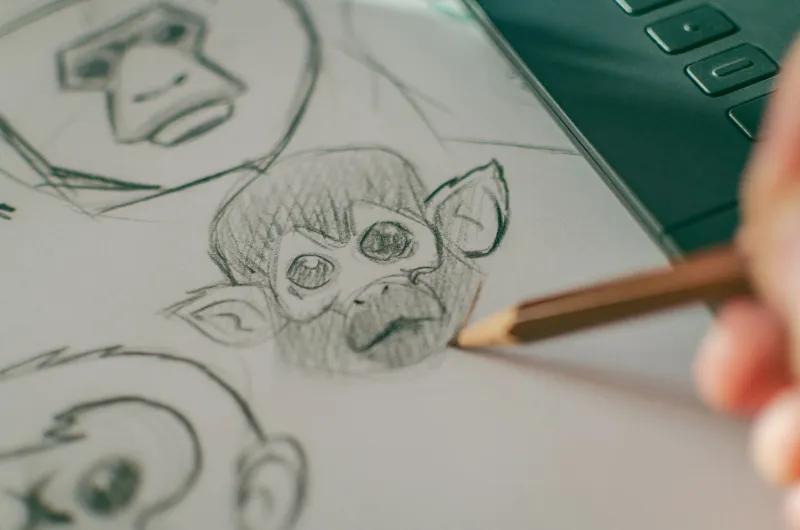
Colour palettes are shifting from the warm ambers and ochres of the classic Western toward something cooler and stranger — the greens and greys of the Irish Atlantic coast bleeding into landscapes that are nominally American but feel somehow transatlantic. Character design is moving away from the angular, hyper-masculine silhouettes of the genre's golden age toward figures that are more varied, more expressive, and considerably more likely to convey their inner lives through their faces rather than the set of their jaw.
Animation, of course, is the ideal medium for this kind of experimentation. The freedom from physical production constraints means Galway's studios can take visual risks that would be prohibitively expensive in live action, and the genre's strong iconography provides enough structural support that those risks rarely collapse into incoherence.
What British Audiences Are Making of It
Early test screenings of several Galway-produced Western animation projects with UK audiences have produced responses that creators describe, with evident satisfaction, as "confused in the good way." Viewers recognise the genre, engage with the subversions, and — crucially for any animated property with ambitions beyond a single series — want to know what happens next.
There's a particular appetite among younger British viewers for animation that treats them as intelligent adults capable of holding complexity, ambiguity, and the occasional mythological digression simultaneously. The BBC's animation commissioning has reflected this in recent years, and streaming platforms have been even more aggressive in pursuing animated content that doesn't talk down to its audience.
Galway's Western reimaginings are landing in that space with some force. The genre's familiarity provides a comfortable entry point; the Irish creative sensibility provides something that feels genuinely new.
High Noon on the Wild Atlantic Way
The Western, it turns out, was always a genre about displacement, about people navigating unfamiliar territory with inadequate maps and competing loyalties. Filtered through the Irish experience — a culture that knows something about displacement, emigration, and the complicated business of making a home in someone else's frontier — it finds a new and unexpected resonance.
Galway's animators didn't set out to rescue a dying genre. They set out to make something interesting, and the Western happened to be lying around looking available. The fact that it's working — commercially, creatively, and in terms of audience engagement — suggests the genre had more life in it than anyone suspected.
The stetson, it seems, fits differently when it's been made on the west coast of Ireland. Wilder, somehow. And considerably more interesting.