Saddle Up, Saoirse: How European Animators Are Riding the Western Revival All the Way to Your Telly
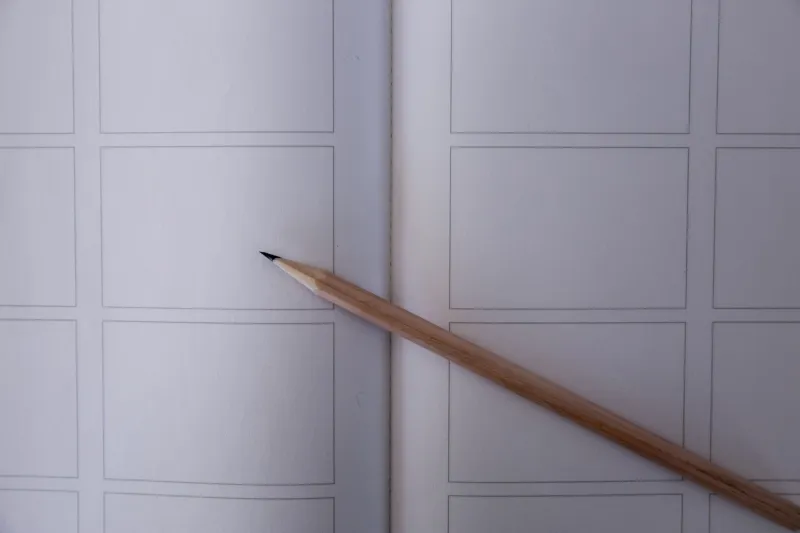
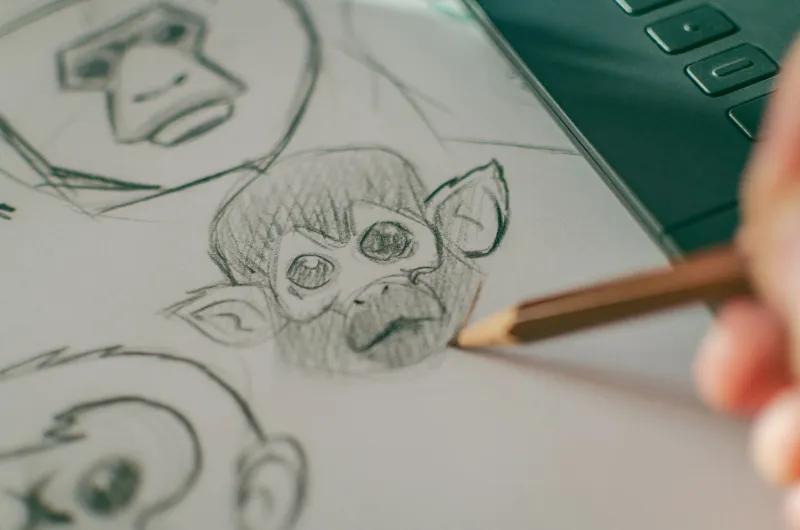
There's a peculiar scene playing out in a studio on the western edge of Ireland. A storyboard artist is pinning sketches to a corkboard — a lone figure silhouetted against a vast, dusty horizon, hand hovering over a holster. Standard Western fare, you might think, except the horizon in question is Connemara, the lone figure is wearing a báinín wool jacket, and the holster contains what appears to be a tin whistle.
Welcome to the new frontier.
Why the Western Never Really Rode Off Into the Sunset
For a genre that critics have been declaring dead since roughly 1975, the Western has an extraordinary habit of turning up alive, dusty, and looking for trouble. In live-action film, the likes of Slow West, The Power of the Dog, and the seemingly indestructible Yellowstone franchise have demonstrated that audiences never truly tired of wide-open spaces, moral ambiguity, and someone squinting meaningfully at something in the middle distance.
But animation? That's been a different story — or rather, it's been the same story, told the same way, for decades. American studios have largely treated the Western as either a nostalgia vehicle (looking at you, Rango, though we mean that affectionately) or a backdrop for children's comedy that strips out every interesting edge the genre ever had.
European animators, it turns out, have been quietly watching all of this and thinking: we can do something genuinely odd with this.
"The Western is essentially a myth about civilisation versus wilderness, about who gets to write the rules," says one Galway-based director who has been developing a Western-influenced animated series for the past two years. "And when you're Irish, sitting on the literal edge of Europe, you have a very particular relationship with those themes. We've been on the receiving end of someone else's civilisation project. That gives you a different angle."
Celtic Storytelling Meets the Six-Shooter
What makes the current European take on Western tropes so intriguing isn't simply the geographical transplant — though watching a showdown unfold on a windswept Connemara bog does have its own surreal charm. It's the collision of narrative traditions that genuinely don't have much business being in the same room together.
Irish storytelling, in its oldest forms, is circular, digressive, and deeply suspicious of heroes who are too clean. The seanchaí tradition — oral storytelling passed down through generations — thrives on ambiguity, on the story that doubles back on itself, on the morally complicated figure who is neither villain nor saviour. The classical Hollywood Western, by contrast, was built on clean lines: good hats, bad hats, a street at high noon, a single defining moment.
Smash those two traditions together and you get something that UK audiences, in particular, seem to find rather refreshing.
"British viewers are sophisticated," argues a Galway Cartoons contributor who has been tracking animation trends across European streaming platforms. "They've grown up with shows that reward patience and punish easy resolution. They actually want the Western that doesn't give you the satisfying shootout. They want the one where everyone goes home confused and slightly damp."
The damp, it should be noted, is non-negotiable when your frontier is the west of Ireland.
The Genre Mashup That Streaming Platforms Are Actually Paying For
Beyond the creative romanticism, there's a thoroughly practical reason why European animation studios are gravitating toward Western-influenced projects right now: the commissioning landscape is actively rewarding genre subversion.
Streaming platforms, having saturated their catalogues with straightforward fantasy, superhero, and slice-of-life animation, are increasingly hunting for projects that sit in the gaps between familiar categories. A Celtic-inflected Western animation — with genuinely distinctive visual language, a built-in ironic distance from American source material, and the kind of dry wit that travels well across the Irish Sea — ticks several boxes simultaneously.
"You're offering something that feels familiar enough to be accessible but strange enough to be memorable," notes one animator currently in development on exactly such a project. "The Western iconography does a lot of heavy lifting. The audience already understands the grammar — the standoff, the stranger riding into town, the corrupt sheriff. So you can use all of that scaffolding and then put something completely unexpected inside it."
For UK audiences specifically, there's an additional layer of pleasure available. The British relationship with American Western mythology has always been slightly ironic — we watched the films, bought the merchandise, and quietly noted that most of the cowboys were Welsh or from East London anyway. An Irish studio playing knowingly with that mythology hits a particular comedic frequency that resonates across the Irish Sea with satisfying precision.
Drawing the Line Between Homage and Something New
Not everyone is convinced the current enthusiasm will survive contact with actual production. Western animation is visually demanding — vast landscapes, dynamic action sequences, and the particular challenge of making horses look like horses rather than extremely optimistic dogs — and European studios don't always have the budget to match their ambitions.
The smarter projects, though, are turning that constraint into a creative decision. Several Galway-based animators have spoken about deliberately stylising their Western landscapes in ways that owe more to Irish manuscript illustration than to John Ford. Think less Monument Valley, more Book of Kells — intricate, patterned, slightly hallucinatory.
"The mistake would be trying to out-Hollywood Hollywood," says one storyboard artist. "We can't win that fight and we'd look foolish trying. But we can make something that looks like nothing else on any platform, anywhere. That's actually more valuable."
The visual language being developed in studios across Galway and the wider west of Ireland is, by all accounts, striking. Landscapes that are simultaneously vast and claustrophobic. Characters whose faces carry the particular weathered quality of people who have argued with the Atlantic and not entirely won. Colour palettes that borrow from bog and stone rather than sand and dust.
The Tumbleweed Rolls East
What's perhaps most surprising about this Western revival in European animation is how earnest it is underneath the irony. Yes, there are jokes. Yes, there is self-awareness about the absurdity of Irish animators staking a claim on American frontier mythology. But the best work emerging from this moment isn't purely satirical — it's genuinely interested in what the Western's core questions mean when asked from a different position on the map.
Who gets to be the hero? Who writes the history of a place? What happens to the people who were there before the story officially began?
Those aren't questions that belong exclusively to the American West. They're questions with very particular resonance in Ireland, and in Britain, and across a Europe still negotiating its relationship with its own complicated past.
The tumbleweed, it turns out, travels further than anyone expected. All the way from Connemara to your sofa, if the streaming deal comes through.
And if the lone figure riding toward the sunset happens to be playing a tin whistle — well. That's just the west of Ireland for you.