Lost in Translation: The Glorious Blunders Irish Animators Make About British Life
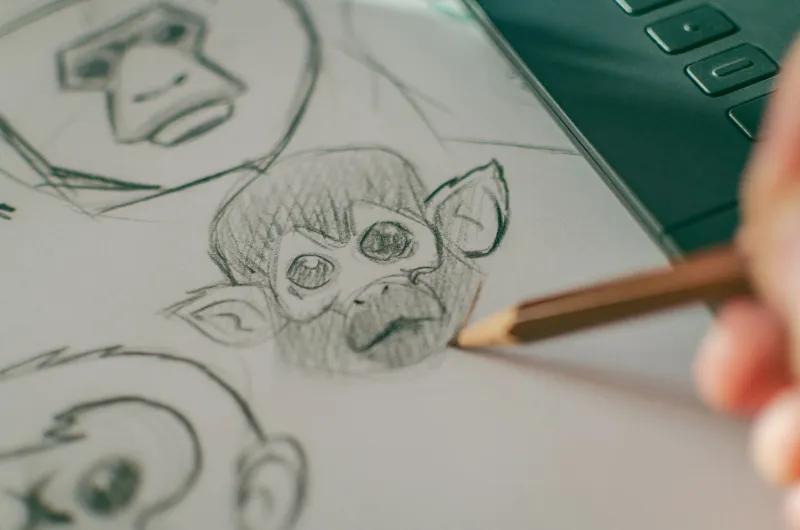
There is a special kind of comedy that only emerges when someone who almost understands a culture tries to explain it to everyone else. Not the clueless outsider's confusion, nor the insider's knowing wink — something altogether more magnificent. Something that lives in the precise gap between "we're basically the same" and "wait, you do WHAT?"
Welcome to the world of Irish animation studios trying to write British characters.
Here at Galway Cartoons, we've been watching this beautiful disaster unfold for years. The Wild West meets the Wild West End, as we like to say — and sometimes those two Wests collide with the comedic force of a shopping trolley rolling into a Poundland display stand.
The Biscuit Problem
Let's start with the most dangerous cultural minefield in the British Isles: biscuits.
Séan Ó Flaithearta, lead writer on the animated series Gull & Grumble — a show following two bickering seabirds navigating the British coastline — recalls the fateful script where a character was offered "a nice biscuit with their tea."
"We drew a digestive," Séan explains, wincing slightly. "A plain one. No chocolate. We thought that was fine. Neutral. Safe. Then our script editor in Manchester rang us and spent forty-five minutes explaining why we'd essentially depicted a war crime."
The revised scene featured a chocolate Hobnob. The episode became one of their most-shared clips on social media, largely because British viewers found the original plain digestive gaffe so endearingly baffling.
"It's become a running joke now," Séan admits. "Whenever we're unsure about something British, someone in the writers' room says 'just give them a plain digestive and see what happens.' It's our internal warning system."
Queuing: More Complex Than Quantum Physics
If biscuits are a minefield, the British queue is an entire unexploded ordinance depot.
Máiréad Connelly, creative director at Atlantic Ink Animation just off Galway's Shop Street, describes the early days of producing content for British broadcasters as "an ongoing masterclass in things I thought I understood but absolutely did not."
"In Ireland, a queue is a practical arrangement," she says. "You stand in line, you wait your turn, you get your thing. Fine. But in Britain, the queue is a spiritual practice. It has rules. It has etiquette. It has feelings. We did a scene where a character accidentally pushed in front of someone at a bus stop, and we played it as a minor incident. Our British co-producer went very quiet on the call. That silence lasted a long time."
The scene was rewritten. The queue-jumper became the series antagonist. The show ran for three seasons.
"Honestly," Máiréad reflects, "our biggest British cultural misunderstandings have generated our best storylines. There's something about not quite getting it that lets you see it more clearly."
The Accent Archipelago
Then there is the matter of regional British accents — a subject that has humbled animators, voice directors, and casting agents from Salthill to Spiddal.
Voice director Ciarán Mulkerrins, who works with several Galway studios on British co-productions, puts it plainly: "We thought 'British accent' was a thing. It is not a thing. It is approximately four hundred things, each of which sounds completely different, each of which carries enormous cultural weight, and several of which sound similar enough to each other that if you mix them up, you will receive very pointed emails."
His studio once cast a Mancunian actor to voice a character from Leeds. The response from Yorkshire viewers was, in Ciarán's words, "educational."
"We now have a laminated chart," he says proudly. "It's colour-coded. It lives next to the kettle. It has saved us from disaster more times than I can count."
The accidental comedy of getting it wrong, however, has also generated genuine affection. A recurring background character in one Galway-produced children's series speaks in what the writing team cheerfully describe as "a sort of general northern English that isn't quite anywhere" — and has developed a devoted fanbase precisely because of it.
"People from Manchester say he sounds like he's from Sheffield. People from Sheffield say he sounds like he's from Newcastle. People from Newcastle say they've never heard anything like him in their lives," Ciarán laughs. "He's beloved. He transcends geography. He is, in some ways, the most British character we've ever created."
The Pub Situation
No survey of Irish-animated British cultural blunders would be complete without addressing the pub.
This is, admittedly, a topic where Irish animators might reasonably claim expertise. And yet.
"We thought we had this one," admits Orla Fahy, showrunner on the adult animated comedy Last Orders, which follows the chaotic staff of a fictional British boozer. "Pubs! We know pubs. We live pubs. We practically are pubs."
The show's pilot episode featured a lock-in scene that, while warmly received overall, prompted a flurry of comments from British viewers pointing out that the fictional pub's layout, licensing hours references, and the specific way characters ordered at the bar were "very Irish."
"One viewer wrote in to say our pub 'felt like a British pub as imagined by someone who had read about British pubs in a very good book but hadn't quite visited one," Orla recalls. "Which was, honestly, fair. We'd done enormous research. We just hadn't done the research of sitting in one for a few hours."
Subsequent episodes were written after what the production team officially logged as "location research trips" to various establishments in Galway that had been recommended by British friends. The show's portrayal of pub culture improved dramatically. The research trips have continued regardless.
Why Getting It Wrong Gets It Right
What's fascinating — and what British audiences seem to instinctively understand — is that these blunders aren't failures. They're a feature.
There's a particular warmth that comes through when creators are clearly trying their best while operating from a position of enthusiastic near-knowledge. British viewers, who are accustomed to seeing their culture either ignored entirely by international media or rendered in the most clichéd tourist-brochure terms, respond with surprising affection to animation that gets the details slightly wrong but captures the feeling exactly right.
"We care about getting it right," says Máiréad Connelly. "We care enormously. And because we care, we notice things that someone who grew up inside the culture might not even register as remarkable. The queue thing — British people don't think about queuing because it's just life to them. We think about it constantly, because to us it's fascinating and slightly terrifying."
That outsider fascination, filtered through genuine affection and a healthy dose of self-aware comedy, might be exactly what makes Galway's animated take on British life so watchable.
After all, nobody satirises a culture quite like someone who loves it just enough to get it magnificently, hilariously, almost-but-not-quite right.
The plain digestive, it turns out, was a masterpiece all along.