Say That Again, But Slower: How Irish Voices Are Winning the Hearts of British Animation Audiences
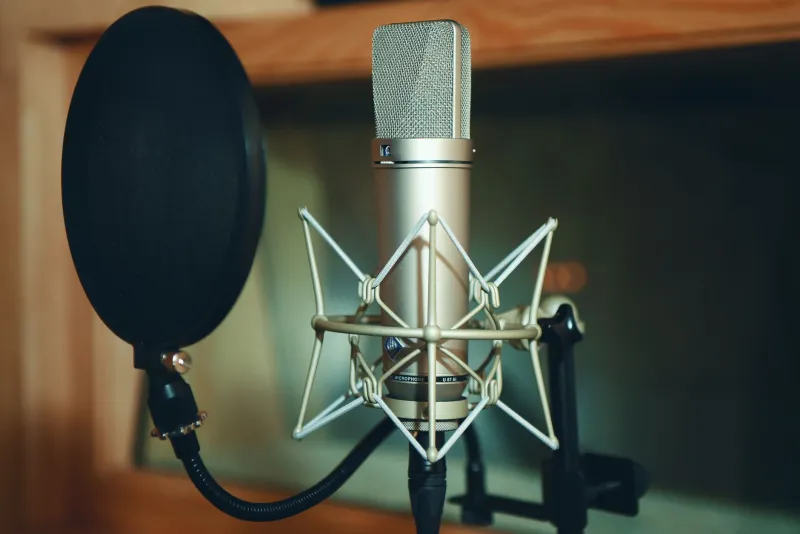
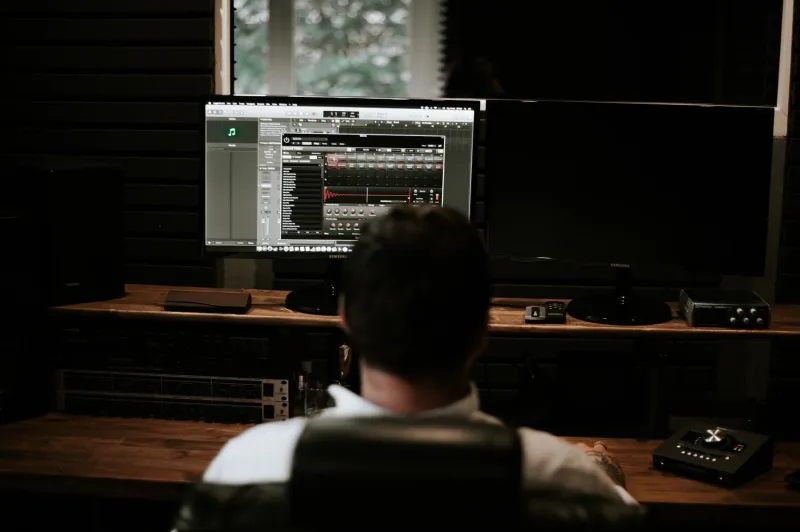
There is a moment, somewhere between the third cup of tea and the second round of biscuits, when a recording session at a Galway animation studio stops feeling like work and starts feeling like a kitchen-table yarn. The voice director leans back, the actor leans forward, and something genuinely unrepeatable gets caught on tape. It is not an accident. It is, increasingly, the whole point.
Irish voice talent has been creeping into British animated productions for years, largely unannounced, tucked behind characters with names like Barnaby or Clementine, their accents softened to a barely-there lilt that gave writers and directors just enough warmth without alarming the schedulers. That era, industry insiders say, is quietly coming to an end — and what is replacing it is considerably more interesting.
The Accent Is the Character
"There was this assumption for a very long time that animation voices had to be either classically trained RP or broadly comedic," says Sinéad Ó Maolalaidh, voice director at a Salthill-based studio that produces content for two major UK streaming platforms. "What we kept discovering, almost by accident, was that when we let Irish actors just be Irish, the characters became three-dimensional in a way that no amount of coaching could manufacture."
The shift is partly demographic, partly cultural, and partly — if you will forgive the bluntness — economic. Galway's animation sector has expanded considerably over the past decade, drawing both homegrown talent and relocating professionals from London, Manchester, and Bristol who found that a two-bedroom flat in Salthill costs roughly the same as a parking space in Soho. With that influx came recording infrastructure, and with recording infrastructure came the quiet realisation that the accents already present in the room were, in fact, a resource.
British broadcasters, for their part, have not needed much persuading. Children's television in particular has undergone something of a casting rethink, with commissioners increasingly wary of the anonymous, placeless voices that populated Saturday morning schedules for decades. "Audiences are clever," says one London-based commissioning editor who asked not to be named because her channel is mid-negotiation with three Irish studios simultaneously. "Children especially. They can tell when something sounds performed versus when it sounds real. And real, right now, often sounds Irish."
More Than a Brogue
It would be reductive, however, to frame this purely as a question of phonetics. The voice actors and directors making this shift happen are at pains to point out that what Irish performers bring to animation is not simply an accent — it is a storytelling sensibility rooted in a culture that has been narrating its way out of difficult situations for several centuries.
Take Ciarán Breathnach, a Galway native who has voiced lead characters in three UK-distributed animated series in the past four years, two of which have been nominated for BAFTAs. Asked to explain what makes an Irish approach to voice work distinctive, he pauses in the way that suggests he has thought about this quite a lot and is choosing his words with some care.
"We're not afraid of silence," he says eventually. "And we're not afraid of sadness in something that is fundamentally funny. Irish comedy has always had that — the joke that has a bruise underneath it. When you're voicing an animated character, that complexity is what makes them stick. Kids remember characters who feel like they've lived a bit."
This is not merely artistic theorising. The commercial data, where studios are willing to share it, tells a supportive story. Viewer retention figures for several Galway-produced properties distributed across UK platforms have tracked above category averages, with qualitative research suggesting that voice warmth and perceived authenticity are significant contributing factors.
The Wild West End, Reconsidered
For those of us at Galway Cartoons who have been watching this industry from the banks of the Corrib for rather longer than is probably healthy, there is something quietly satisfying about the reversal of fortune the current moment represents. The phrase "Wild West End" in our masthead was always a gentle provocation — the suggestion that the creative gravity pulling British entertainment westward was not merely wishful thinking but an observable trajectory.
The voiceover industry, historically centralised in London's West End recording studios, is experiencing exactly that gravitational pull. Several prominent UK voice agents now maintain active rosters of Irish talent based in Galway and the surrounding region, and at least two London studios have established satellite recording arrangements with Connaught facilities to avoid the cost and scheduling friction of flying talent east.
"It used to be that you came to London to get cast," notes one agent who represents a roster of Irish voice performers. "Now London comes to Galway to do the recording. The talent was always there. The infrastructure just needed to catch up."
Authenticity as Industry Standard
The broader question — whether this moment represents a lasting structural shift or a fashionable cycle that will eventually reverse — is one the industry is actively debating. There are sceptics who point out that animation casting has always been cyclical, and that the current enthusiasm for regional authenticity could be succeeded by another era of deliberate vocal neutrality.
But there are reasons to think this time is different. Streaming platforms, which now account for a substantial portion of UK animation commissioning, operate globally while competing locally — a paradox that makes authentic regional identity more commercially valuable, not less. A show that sounds genuinely Irish travels differently than one that sounds generically mid-Atlantic, and in a content landscape where differentiation is everything, that distinctiveness has real worth.
Sinéad Ó Maolalaidh, back in her Salthill studio, puts it more simply. "We used to apologise for how we sound," she says. "Now we charge extra for it."
She says this with a grin that suggests she is joking. She also says it in a tone that suggests she is absolutely not.
Galway Cartoons is based on the wild and windswept west coast of Ireland, where the Atlantic keeps us honest and the broadband is, on most days, perfectly adequate.