Punch, Pause, Pint: The Secret Architecture of Irish Animation Comedy That British Studios Haven't Cracked Yet
Somewhere between the Atlantic wind rattling the windows and the third rewrite of a scene that was already funny, a Galway animation writer will decide the joke isn't landing fast enough. Then they'll slow it down. And somehow, inexplicably, that makes it funnier.
This is not an accident. This is the Galway Gag Formula in action — and if you've been watching Irish-produced animation lately and wondering why it keeps making you laugh harder than the slicker, better-funded stuff coming out of London, you're not imagining things.
The Oral Tradition Nobody Puts on a CV
Irish storytelling has always been a performance art. Long before storyboards, before scripts, before anyone had a clue what a "beat sheet" was, the Irish were perfecting the art of the yarn — the long winding road of a story that seems to be going absolutely nowhere until it arrives, with devastating precision, exactly where it needed to be all along.
That tradition doesn't disappear when you hand someone a drawing tablet and a commission from a streaming platform. According to Ciarán Ó'Meara, head writer on the acclaimed animated series The Bog Road Chronicles (a Galway Cartoons production that's been quietly murdering it on European platforms for two seasons), the oral storytelling heritage is essentially baked into how his team structures comedy.
"We don't really talk about 'setup and punchline' in the way British writers' rooms do," he says. "We talk about the journey. The laugh at the end is the destination, but you have to make the journey worth taking. If the audience is already ahead of you, you've lost them. If they're slightly behind you, that's the sweet spot."
That slight lag — the half-second where the audience is still catching up to what just happened — is arguably the most valuable piece of real estate in comedy timing. British animation, with its tradition of sharp, self-aware wit and rapid-fire gaggery, often rushes straight through it. Galway studios, almost by cultural default, know how to park in it.
Small Teams, Faster Laughs
There's also a structural argument to be made, and it's less romantic but arguably more important.
A major London animation studio working on a flagship comedy series might have a writers' room of fifteen people, three layers of editorial oversight, a network of executive producers, and a development timeline that stretches across eighteen months. A Galway studio producing the same type of content might have four writers, a director who also does storyboards, and a deadline that concentrates the mind wonderfully.
Fewer cooks, it turns out, make for tighter jokes.
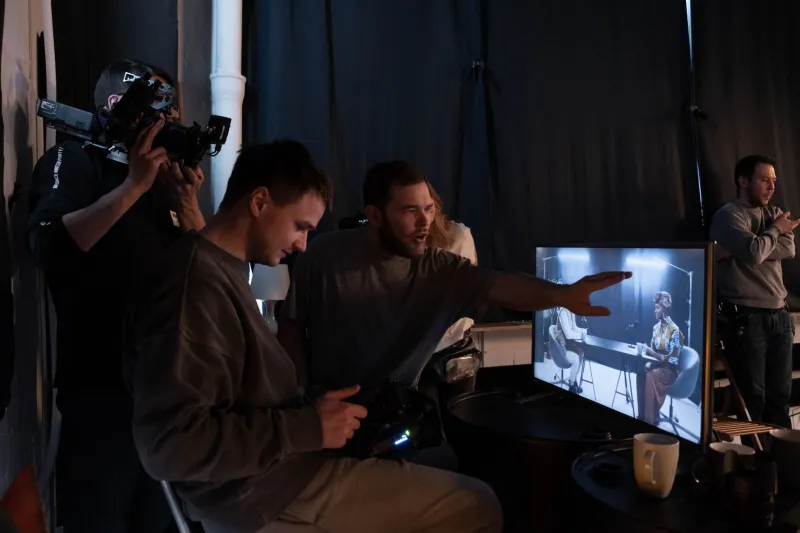
"When you've got a small team, you iterate faster," explains Sinéad Fahy, director and co-creator of the animated short series Maura's Mad Dash, which picked up a BAFTA nomination last year and has since been licensed to three European broadcasters. "A joke goes up on the board, we read it aloud — always aloud — and within ten minutes we know if it works. In a bigger room, that same joke might spend a month in committee before anyone admits it's not landing."
The read-aloud test is something multiple Galway writers mention unprompted. It's a direct inheritance from oral tradition: if it doesn't work when spoken, it doesn't work. Full stop. For an animation studio, where voice performance and timing are inseparable from the written gag, this is an almost unfair competitive advantage.
The Silence Is the Joke
If there's one technical element that separates Irish animated comedy from its British counterpart most consistently, it's the use of negative space — the pause, the held frame, the moment where nothing happens and everything lands.
British comedy animation has historically been terrified of silence. The tradition runs through everything from classic Saturday morning telly to modern streaming fare: keep it moving, keep it loud, never let the audience get ahead of the edit. It's an approach that produces excellent comedy. But it's not the only approach.
Galway studios — perhaps because their writers have grown up with a storytelling culture that understands the power of the pregnant pause, the slow sip of tea before the devastating observation — deploy silence like a weapon.
"The pause is where the audience does the work," says Ó'Meara. "And when the audience does the work, they feel brilliant. They feel like they got there themselves. That's the best kind of laugh — the one that feels like it was their idea."
This philosophy shows up frame-by-frame in productions like The Bog Road Chronicles, where reaction shots are held a full beat longer than convention suggests, and the comedy accumulates rather than fires. British audiences, raised on faster-cut comedy, initially find it slightly disorienting. Then they find it hilarious. Then they can't explain why.
Can You Learn It, or Is It in the Water?
The uncomfortable question — uncomfortable for British studios, anyway — is whether any of this is actually teachable.
Fahy thinks it is, mostly. "Timing is craft. You can absolutely learn to sit in a pause longer than feels comfortable. You can learn to trust the silence. It's just that most people are trained out of it early, because the instinct in a writers' room is always to fill the gap."
Ó'Meara is less convinced. "There's something about growing up in a culture where the story is the social currency — where you're judged at a dinner table on how well you tell a thing — that changes how you think about structure. I'm not saying British writers can't be funny. Obviously they can. I'm saying they're working from a different set of instincts, and instincts are harder to teach than technique."
What both agree on is that Galway's animation scene is producing comedy that lands differently — not louder, not flashier, but with a precision that's starting to turn heads well beyond the Wild West of Ireland.
The Formula, Such As It Is
So what's the actual Galway Gag Formula? If you're looking for a clean equation, you'll be disappointed. It's more of a philosophy: trust your audience, honour the journey, weaponise the pause, and for the love of all that's holy, read it aloud before you animate a single frame.
It's not a formula that fits on a whiteboard. It's one that fits in a pub, over a long conversation that goes in three wrong directions before arriving, with perfect timing, exactly where it needed to be.
Which, if you think about it, is the whole point.